Wieldy
- sector
- B2B SaaS for dental and orthodontic insurance billing, with AI
- client
- Wieldy
- scope
- immersion through handoff, and the new features
- period
- since 2023
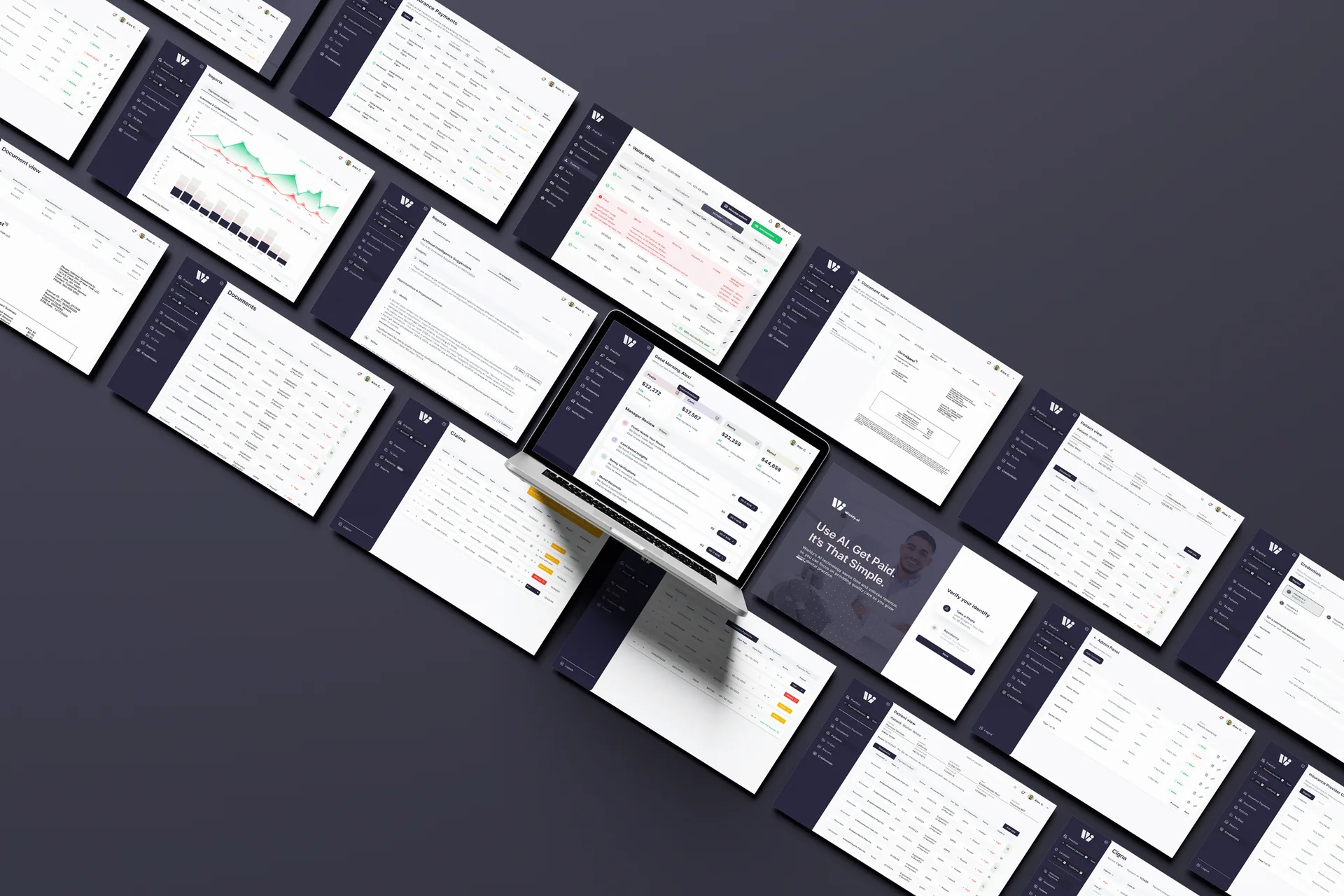
Wieldy operates at the intersection of dental and orthodontic practice operations, insurance claims processing and applied AI. Each domain carries its own vocabulary, regulatory surface and failure modes.
the client
Combined in one product, the design risk is producing an interface that is confidently incorrect in a context where incorrect has a financial cost to the practice.
The positioning at the time, technology that saves time and unlocks revenue, described a single mechanism in dental and orthodontic billing. An unsubmitted claim is revenue already earned and not yet collected. The design objective was reducing the elapsed time from treatment completed to claim submitted to payment received, and reducing how much of that sequence a person has to hold in working memory.
scope
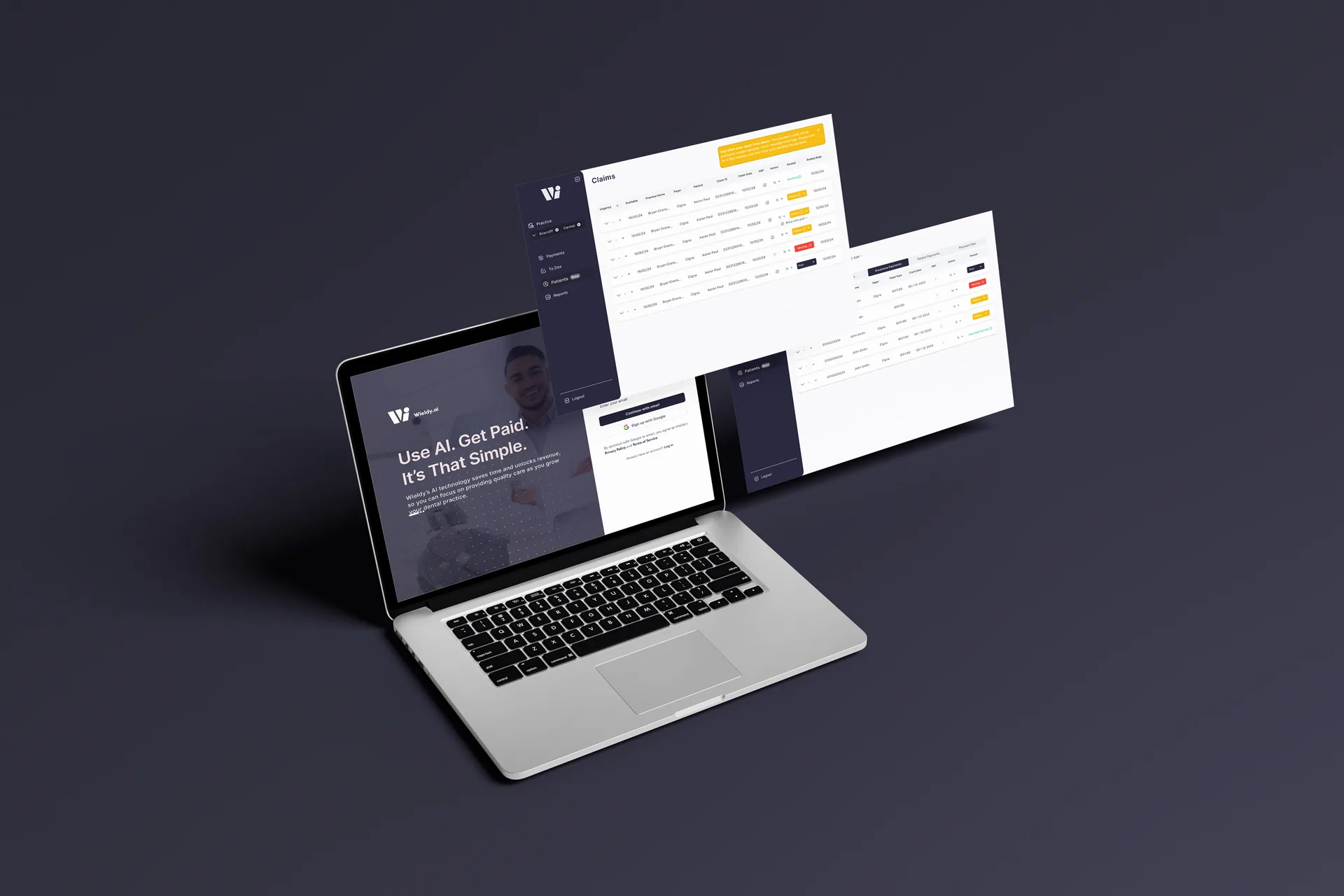
A complete product: registration and onboarding, patient records, insurer records, claim construction and submission to insurance companies, reporting, and an AI layer addressing recurring practice questions.
Those recurring questions occur at decision points where the user is uncertain whether a submission is correct. An AI response in that position carries the operational weight of a validation rule, which sets a higher accuracy requirement than conversational features usually carry.
process
Immersion
It preceded user work. In B2B billing the governing constraints originate outside the product: what an insurer accepts, in what format, within what window.
Sketches and user flows
One path is used daily and the remainder are used quarterly, and determining which path receives priority accounted for the majority of the design decisions.
Sprints with a CSD dynamic
Mapping certainties, suppositions and doubts with stakeholders. In a regulated domain this surfaces which stated certainties are assumptions. An incorrect assumption in billing produces a rejected claim.
Interface design
Through high fidelity, with reporting treated as a primary surface. Practice owners evaluate a billing tool by how quickly it answers questions about outstanding revenue.
Handoff
Prototyped for testing, then specified for build.
principal design decision
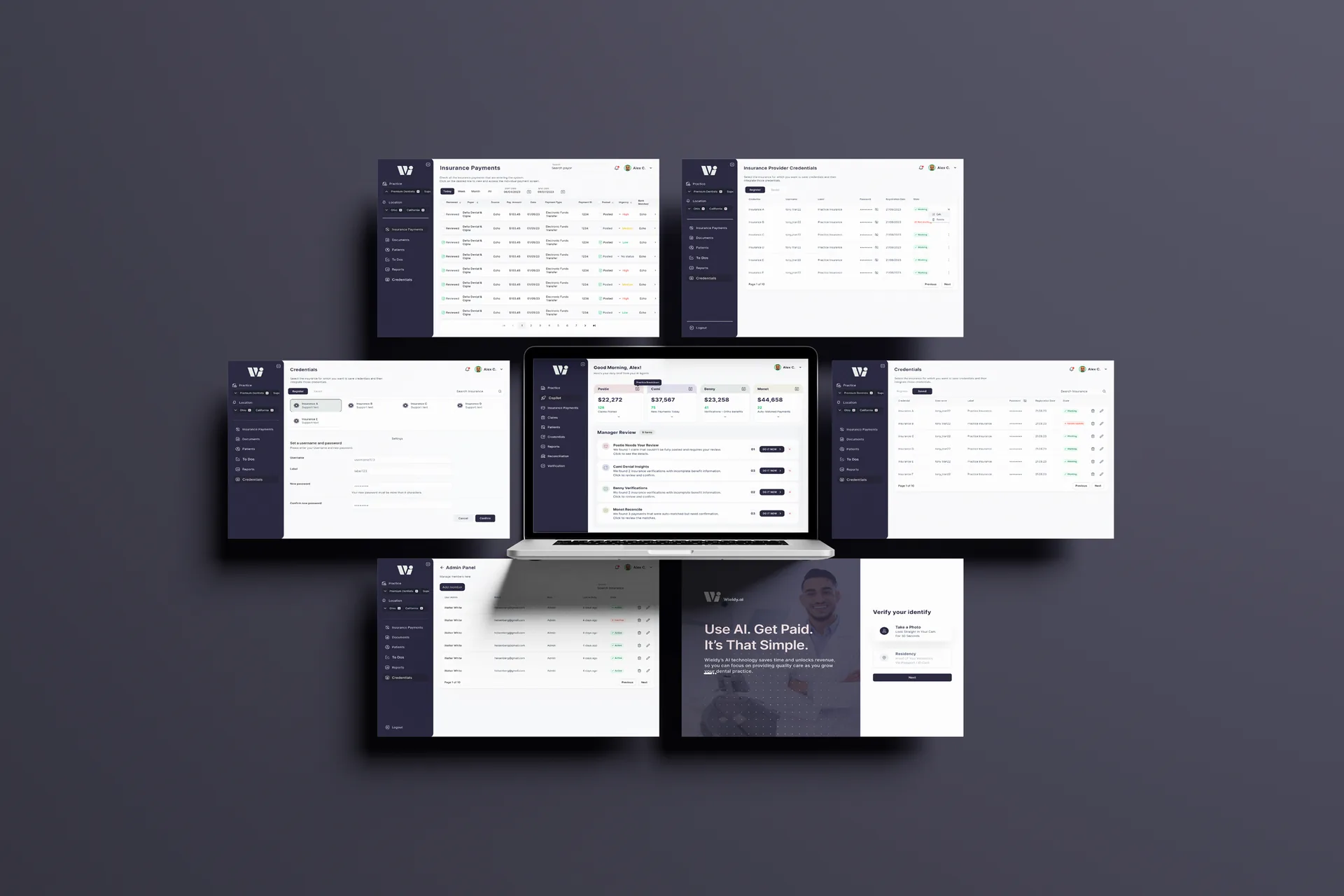
The interface separates what the product can assert from what it can only indicate. Wieldy has authoritative knowledge of what was submitted and when. It has no authoritative knowledge of whether an insurer will accept a claim. Presenting both with equal confidence degrades trust in the product after a single adverse period.
The AI layer operates on the indicative side of that boundary. The claim flow operates on the assertive side.
what the product reports today
Figures published by Wieldy.
- 80+hours saved per month on insurance posting, denial management and EFT payment reconciliation
- +7%in collections, in a customer account over six months
- −54%in accounts receivable aging, in the same account and period
method notes
Domain risk translates directly into design risk, and immersion ahead of interface work was the only viable sequence.
In B2B the operator and the purchaser are frequently different people, and the purchaser evaluates the product through the reporting screens. Scheduling those last is a common and costly sequencing error, and settling that order is what Squad Canvas is for.
The product team brought the studio back for the new features.
Building a new product?
Research, flows and interface tested with the people who use it, ready for engineering.